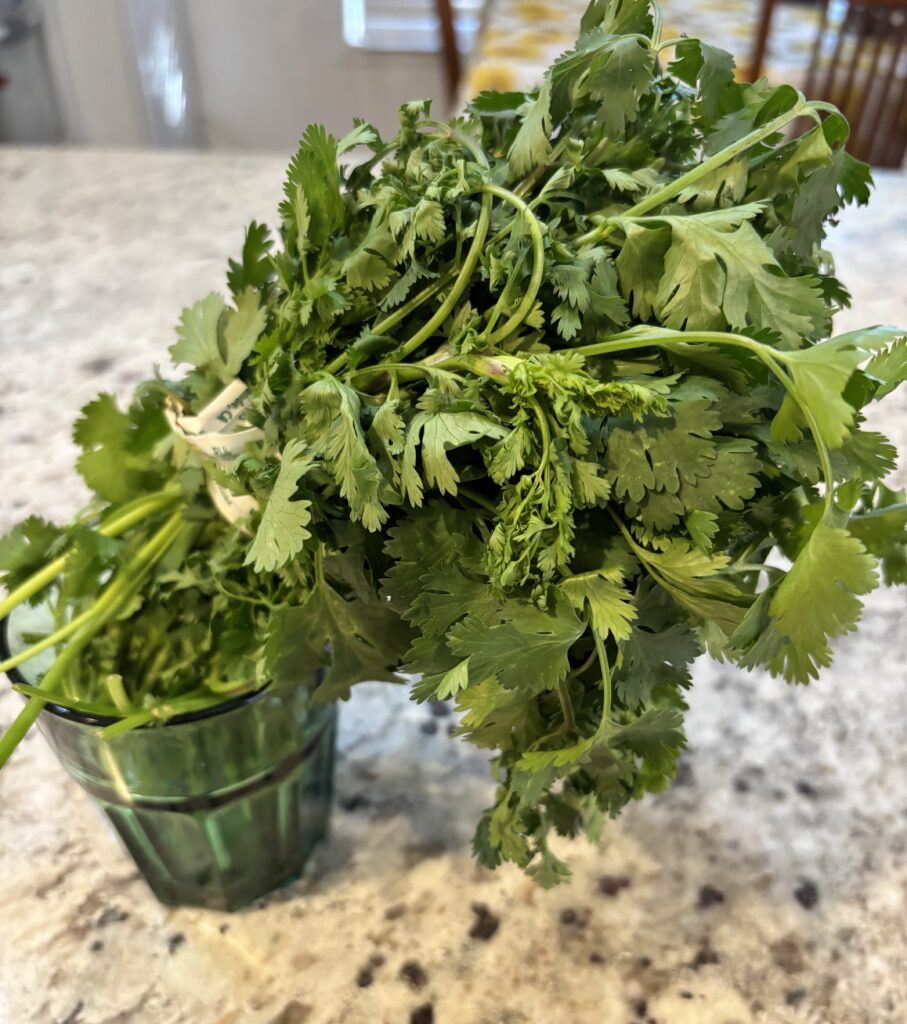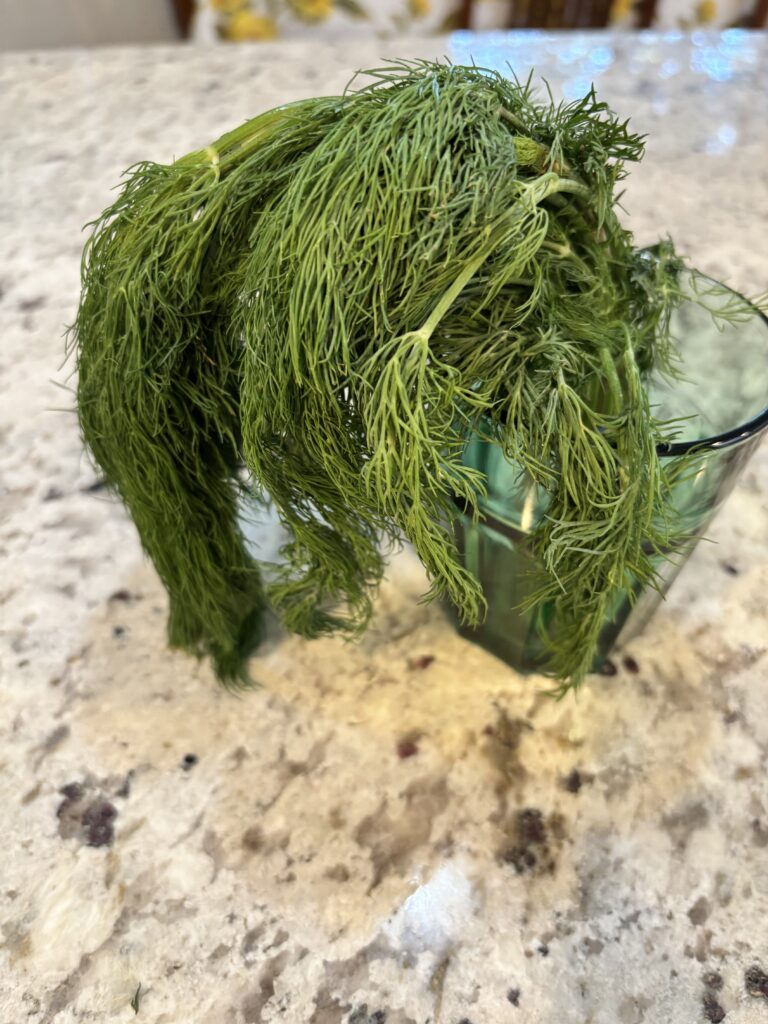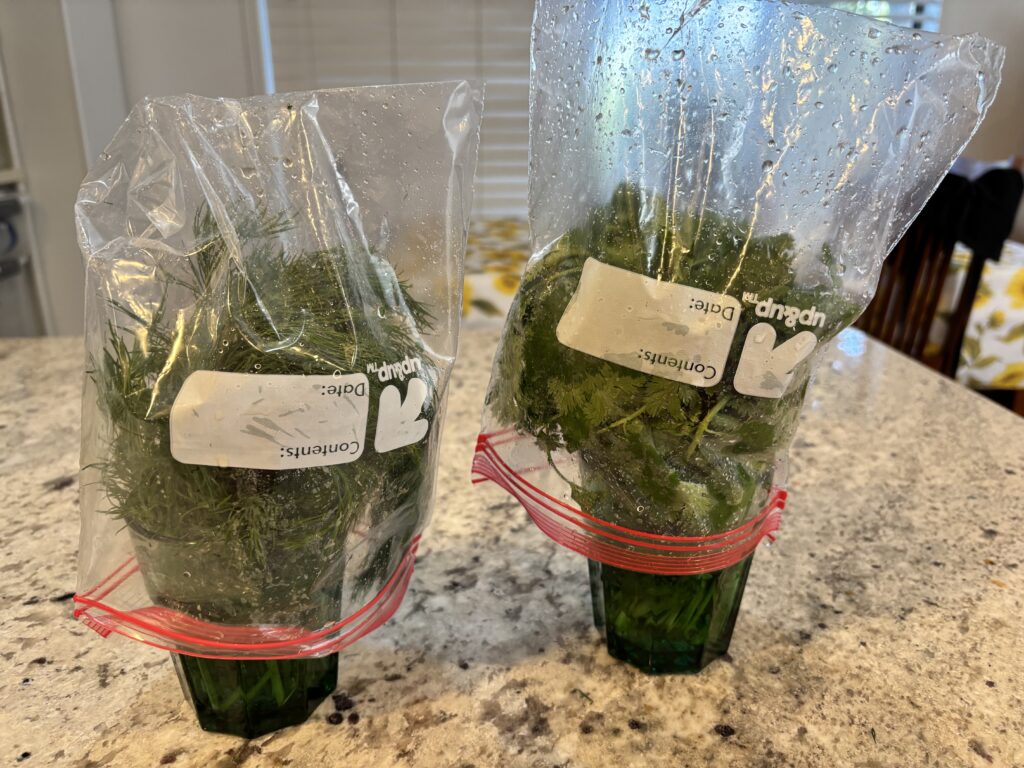
Fresh leafy vegetables and herbs are expensive. I extend the life of dill and cilantro for weeks by washing, trimming the stems, and storing them in a glass of water covered in a plastic bag. Fresh thyme lasts for weeks washed, dried, and wrapped in a slightly damp paper towel then placed in a zip lock bag with all air squeezed out. So what do you do when you open the vegetable bin and see sad, wilted bags of greens and herbs. Rehydrate them! Rehydration is a miraculous process that can bring most leafy greens and herbs back to life in 30-60 minutes. You will be amazed to see how they are revived, last longer, and ready for immediate use.
This process works if the product has not oxidized or turned brown/black in color. That indicates spoilage but vegetables can still be useable after you remove the discolored bits. If the product has a fair amount of green and just a bit of dark discoloration, you can still preserve salvage something. I use this process with kale, chard, parsley, cilantro, dill, thyme, escarole, lettuce, to name a few.
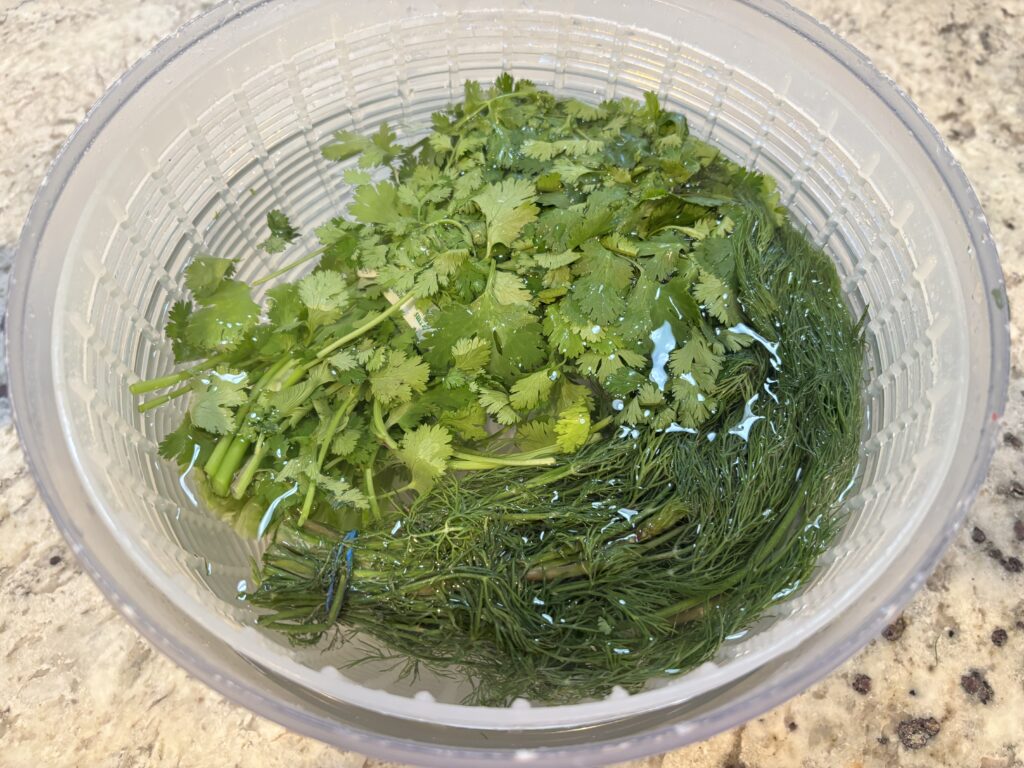
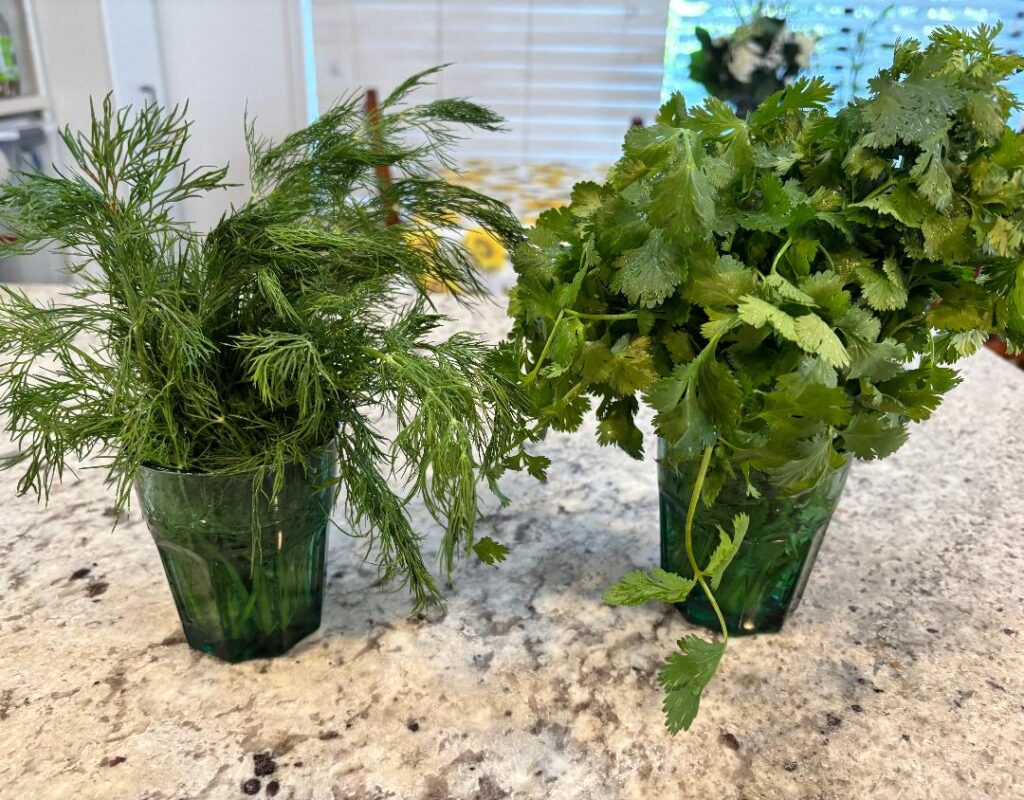
You can see from these pictures the transformation in an hour, but you can leave them in water, at room temperature, for hours if your home is not too hot. I would say < 70 degrees in your home if you are leaving them for several hours. I have soaked vegetables and herbs before I start work, drained them mid-day, and they rehydrated perfectly. Letting the product sit in water closer to one hour will yield better results than 30 minutes so plan accordingly.
Parsley, dill, and cilantro stored in glass jars covered with sandwich bags will last 2-3 weeks in the fridge if you prepare them shortly after purchasing. Rehydrated herbs will last about a week or more in the fridge. Thyme stored (see process below) will last at least two weeks sometimes longer. Basil and mint are finicky, they last about a week in a glass jar covered with a sandwich bag. Tarragon is also a bit tricky because it will spoil in water. I store it dry in a sandwich bag and as soon as it starts to blacken, chop green leaves, place in ice cube tray with water or olive, and freeze.
Process for leafy greens or lettuce:
- Roughly slice in large pieces, place in a salad spinner filled with water, wash and spin dry.
- Refill the container with fresh water with 4-5 ice cubes to cover the vegetables and let sit for 30-60 minutes, up to 4 or 5 hours if your home is <70 degrees inside.
- Drain, spin, and use however you like. To store them, place one paper towel in the bottom of a resealable bag, add the greens, remove as much air as possible, and reseal. I store mine in heavy resealable vegetable bags, removing as much air as possible, and without paper towels.
Process for herbs* such as dill, parsley, cilantro or mint:
- Trim the stems, like you would fresh flowers, and place in a salad spinner fill with water, wash, and spin dry.
- Refill the spinner with fresh water to cover the herbs and let them sit for one hour.
- Remove from water and spin dry. Place each bunch in a glass of water and loosely cover with a small plastic bag.
- Note about thyme: after drying, snugly wrap in a half sheet of barely damp paper towel, place in sandwich bag, remove the air and store in vegetable bin.
*Basil bruises easily so it is best to trim the stems and place the bunch in a glass of water, loosely cover with small plastic bag. Refrigerate on shelf close to the front where it is less cold.